Commas in a List for Kids
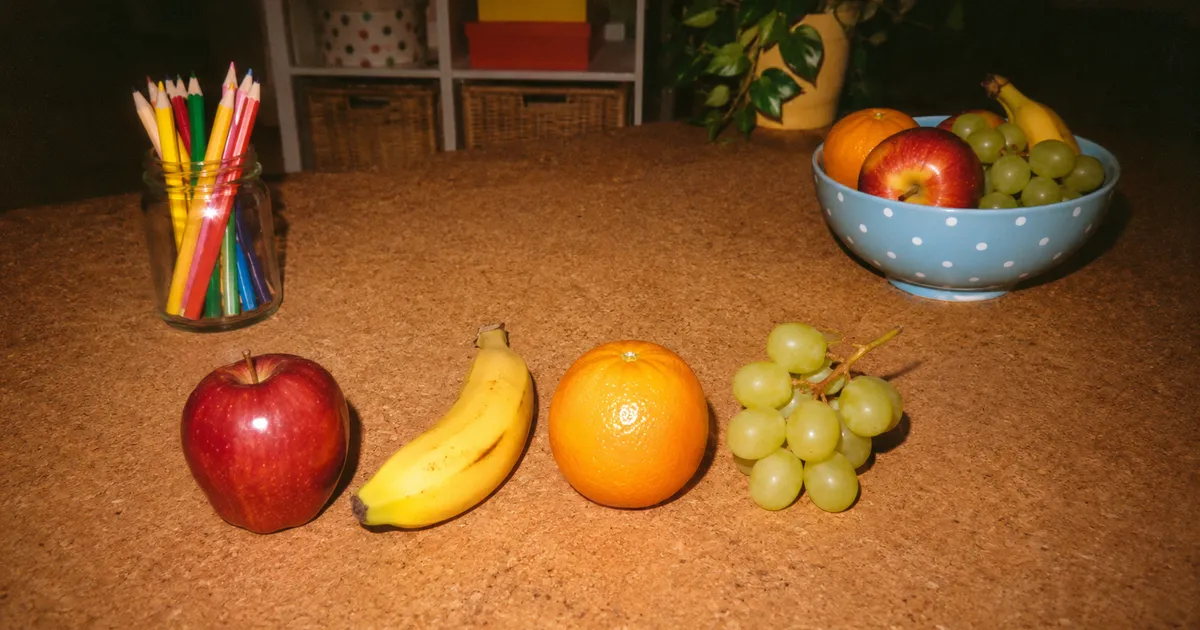
A list with three or more elements needs commas between them: “We packed socks, a hat, and a book.” Two commas divide three nouns and mark each boundary. Commas in a List: A Practical Guide for Kids teaches the pattern for nouns, verbs, adjectives, and longer phrases, including when a final comma prevents confusion. To check a sentence, count the separate parts sharing one grammatical job, not every word.
📥 Comma List Practice
Learn to separate items and correct common punctuation mistakes.
Leave your email — we'll send the PDF to your inbox.No spam — the PDF plus one short reminder. Unsubscribe anytime.
What Children Need to Understand
A written list groups three or more elements with the same role in a sentence. The elements might name things: “The box holds chalk, paper, scissors, and glue.” They might show actions: “We washed, dried, folded, and stored the clothes.” They can describe something: “The path was narrow, steep, and muddy.”
Children should say the sentence aloud and listen for its parts. Speech includes pauses, but not every pause needs a comma. Ask: “Which words or phrases are separate parts of this list?” Once children identify those parts, comma placement becomes easier.
Commas in a List: A Practical Guide for Kids works best when children learn the meaning before the punctuation. A child who speaks two or more languages may know different list patterns. That knowledge helps, but English punctuation must be learned as its own system.
How Commas Work in a List
In English, commas separate entries in lists of three or more. Commas in a List: A Practical Guide for Kids uses this model: the first part, the second part, and the final part. The joining word is and or or, placed before the final entry.
A two-element list needs no comma. Write “We need pencils and paper,” not “We need pencils, and paper.” The word and separates the pair. With three elements, write “We need pencils, paper, and rulers.”
The last example starts with the opening phrase “After school,” which has its own comma. Not every comma belongs to the list. Ask children to underline the list items, then examine other punctuation separately.
Rules and Clear Examples
Find the word that controls the list. In “Nora chose red, yellow, and green paint,” the verb chose applies to each colour. In “You may draw, read, or build a model,” may applies to each action. This shared role identifies one list.
Keep the items in the same grammatical form. “We like swimming, cycling, and skating” has three -ing forms. “We like to swim, cycling, and to skate” is uneven. The commas are not the main problem; the list lacks a steady pattern. A balanced list takes less effort to read.
Longer items follow the same rule: “For the project, your child can make a poster about local animals, record a short weather report, or write instructions for a game.” Commas in a List: A Practical Guide for Kids applies to phrases and single words. Across LearnLink lessons, our experienced tutors help children hear and build these patterns in context.
The Final Comma and Different Writing Styles
The comma before the final and or or is called the Oxford comma or serial comma. Certain English style guides require it in every list. Others omit it unless it prevents confusion. Both “rice, beans, and salad” and “rice, beans and salad” may therefore be correct under different house styles.
Children should follow their school, learning programme, or publication style. When no style is set, using the final comma consistently is practical. It displays the list pattern and prevents readers from joining the last two items by mistake.
Meaning matters more than style debates. Compare “I made cards for my cousins, Mia and Leo” with “I made cards for my cousins, Mia, and Leo.” The first may identify Mia and Leo as the cousins. The second names three separate recipients. The final comma changes the meaning.
Correcting Common Mistakes
A frequent mistake is placing a comma after every word: “We bought, apples, bread, and milk.” The verb and first item stay connected, so write “We bought apples, bread, and milk.” Another error removes the separators: “We bought apples bread milk and juice.” The reader must then identify the list unaided.
Children may add a comma to a two-item list: “I packed a shirt, and a coat.” Remove it: “I packed a shirt and a coat.” But a comma before and is correct between two complete thoughts: “I packed a shirt, and my brother carried the coat.” Each side can stand as a sentence.
Commas in a List: A Practical Guide for Kids helps repair mixed forms. For “She likes drawing, to sing, and football,” first balance the pattern: “She likes drawing, singing, and playing football.” Then check the punctuation. Repairing structure before commas creates a repeatable editing habit.
Practice Activities
Short practice works when children explain each choice. Commas in a List: A Practical Guide for Kids covers more than inserting marks. Ask your child to name the items, identify the joining word, and decide whether the sentence has two items or at least three. This method replaces guessing.
Add the Missing Commas
Rewrite these sentences with the correct punctuation.
1. We planted onions carrots beans and peas.
2. The bird hopped turned and flew away.
3. You may use blue silver or gold paper.
Answers: We planted onions, carrots, beans, and peas. The bird hopped, turned, and flew away. You may use blue, silver, or gold paper.
For the first activity, let your child tap once per item. Four taps should match four things in the garden list. Younger learners can use this physical check; older children can underline each complete item or phrase.
Decide Whether a Comma Is Needed
Correct only the sentences that need a change.
1. We need soap and water.
2. I can whisper, or shout.
3. The room was warm, bright, and quiet.
4. Sam opened the gate, and the dog ran outside.
Answers: Sentence 1 is correct. Sentence 2 should be “I can whisper or shout.” Sentence 3 is correct. Sentence 4 is correct because it joins two complete thoughts.
The second activity shows why counting nouns is insufficient. Children must inspect sentence structure. A two-item list follows one pattern; two complete thoughts joined by and follow another.
Build a Balanced List
Finish each sentence with three items in the same form.
1. At the park, I like to ___, ___, and ___.
2. My ideal room is ___, ___, and ___.
3. Before class, I ___, ___, and ___.
Sample answers: At the park, I like to run, climb, and explore. My ideal room is calm, bright, and tidy. Before class, I find my book, sharpen my pencil, and read the task.
Many answers can work. Check for three parallel items, commas between them, and a suitable joining word before the last. Children can read their sentences aloud to test the rhythm and meaning.
When a word has several meanings or pronunciations, Cambridge Dictionary is a useful check before turning it into child-friendly examples.
Frequently Asked Questions
When Should My Child Use Commas in a List?
Your child should use commas to separate three or more items with the same role. Commas in a List: A Practical Guide for Kids uses “apples, pears, and plums.” A two-item list, such as “apples and pears,” needs no comma.
Is the Comma Before “And” Always Required?
No. The final comma, called the Oxford comma or serial comma, depends on the chosen style. Certain schools and publications require it; others use it only to prevent confusion. Your child should follow one style consistently throughout the piece.
Can Commas Separate Actions as Well as Objects?
Yes. List items can be nouns, verbs, adjectives, or phrases. In “We stretched, ran, and rested,” the commas separate actions. Check that the items share one role and balanced form before placing the commas.
Why Does My Child Put a Comma Before Every “And”?
Your child may associate lists with a comma near “and” and apply the clue too widely. Punctuation depends on structure. Two items need no comma, while two complete thoughts may take one. Underlining each item or thought reveals the difference.
How Can We Practise List Commas Without a Worksheet?
Use lists from daily routines. Your child can name three foods for a meal, three things in a bag, or three actions before bedtime, then write the sentence. Ask them to circle each item and check the separators. Changing nouns to actions provides extra practice.
Start your child's English journey today — book a trial lesson with LearnLink.
Stay updated on our latest tips and resources by following us on Instagram LearnLink.